How Hot Runner Systems Drive Efficiency in High-Demand Industries: Automotive, Medical, Packaging, and More
In today’s competitive manufacturing landscape, efficiency isn’t just nice to have, it’s the difference between staying ahead or falling behind. Across industries like automotive, medical devices, packaging, aerospace, and consumer goods, companies face relentless pressure to produce higher volumes, tighter tolerances, and sustainable results. For many manufacturers, hot runner systems have become the backbone of production efficiency.

Contact +1 (908) 281-0055 or sales@polymercleaning.com to discuss your Hot Runner Systems today! Experts in High Quality Hot Runner Parts, Repair, & Maintenance.
With over 430,000 hot runner systems installed globally in 2024 and North America accounting for 22% of that volume (360 Research Reports), it’s clear that the technology is no longer a niche tool, it’s a cornerstone of modern plastics manufacturing. From reducing cycle times by more than 20% to virtually eliminating material waste, hot runners represent a proven pathway to meeting the demands of high-volume industries.
The Evolving Role of Hot Runner Systems in Manufacturing
Hot runner systems are no longer seen as optional efficiency ; they’ve become a competitive necessity in high-volume manufacturing.
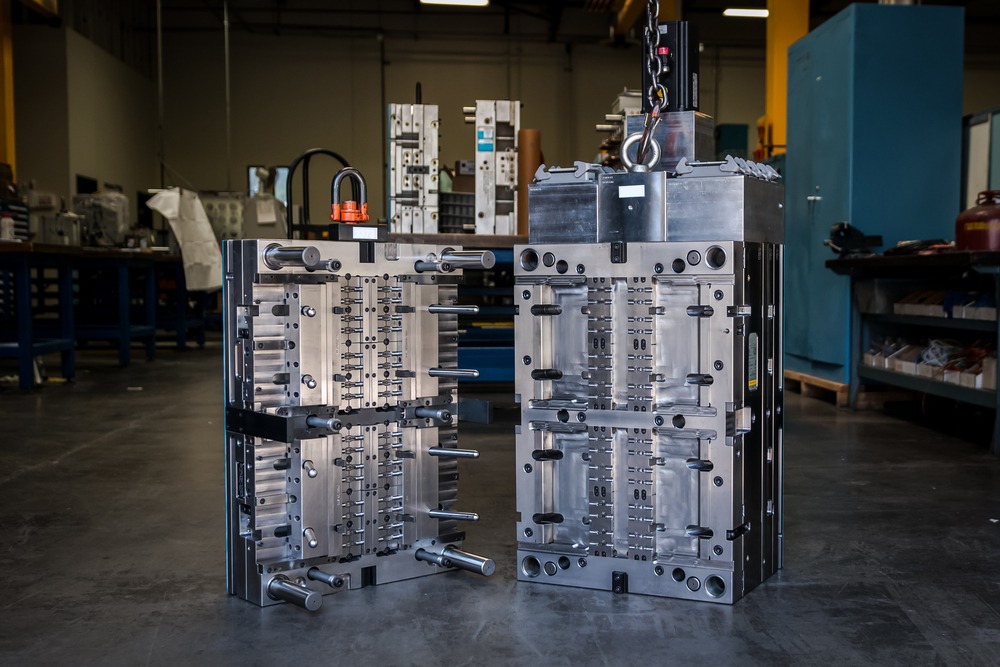
The market is projected to grow at a steady 6.4% CAGR through 2030, reaching $6.38 billion in value (Grand View Research). This growth is fueled by escalating demands for shorter cycle times, sustainable operations, and flawless part quality.
Innovations such as valve-gated technology, advanced thermal insulation, and IoT-enabled monitoring are reshaping expectations of system performance. For manufacturers, the real challenge is no longer whether to adopt hot runner systems, but how to select designs and service partnerships that deliver long-term reliability, consistency, and measurable efficiency gains.
Key Industries Leveraging Hot Runner Efficiency
While the underlying principles of hot runner technology are consistent, the value it delivers can look very different across industries. In sectors like automotive, medical, packaging, aerospace, and consumer goods, efficiency takes on distinct forms – ranging from reduced cycle times to sustainability gains to uncompromising precision. Below, we’ll explore how each of these high-demand industries depends on hot runner systems to maintain productivity, competitiveness, and innovation.


Automotive: Speed, Scale, and Precision
The automotive sector is the single largest consumer of hot runner technology, representing roughly one-third of market demand and projected to grow at 16–17% CAGR (Market Growth Reports, Grand View Research).
Why automotive depends on hot runners:
- High-volume production: Components like bumpers, dashboards, and interior trims must be produced at scale, often in millions of units annually.
- Tight tolerances: Safety-critical parts demand dimensional accuracy that hot runners help achieve.
- Cosmetic quality: Visible components like panels and knobs require flawless surfaces, hot runners reduce flow lines and blemishes.
Automotive manufacturers also benefit from sustainability gains. 40% of new hot runner installations prioritize energy efficiency features (Global Growth Insights), which directly aligns with automakers’ push toward lighter vehicles and greener production processes.
Medical Devices: Reliability and Regulatory Compliance
Few sectors are as demanding as medical manufacturing. Every syringe, IV housing, and surgical tool must meet uncompromising standards for cleanliness and precision.
Hot runner injection molding plays a crucial role here:
- Defect reduction: Precision temperature control minimizes risk of voids, flash, or contamination.
- Material integrity: Medical-grade polymers are expensive and sensitive to processing; hot runners reduce waste and preserve quality.
- Scalability: The system supports mass production of millions of identical, regulation-compliant components.
The integration of smart hot runner systems is also expanding in medical device production. New designs with IoT and AI-enabled controls have been shown to improve operational efficiency by up to 20% (Reports and Data), providing manufacturers with real-time monitoring and process consistency.
Packaging: Speed, Sustainability, and Consistency
Packaging accounts for another large segment of hot runner demand, representing nearly 35% of the global market (360 Research Reports). From bottles and closures to thin-wall containers, packaging is all about volume and efficiency.
Hot runner systems enable:
- Ultra-high throughput: Short cycle times allow billions of packaging units to be produced annually.
- Light Weight: Thinner, more sustainable packaging is possible without sacrificing quality.
- Scrap elimination: Critical in packaging where even small amounts of waste add up across mass production.
With consumer demand pushing for more eco-friendly packaging, hot runners directly support sustainable injection molding practices by reducing energy consumption and maximizing material yield.
Aerospace and Consumer Goods: Quality Without Compromise
In aerospace, lightweight plastic components must meet rigorous standards for strength and reliability. Hot runner systems ensure consistent material flow, which is critical for tight tolerances in demanding applications.
For consumer goods – from electronics housings to household products – the emphasis is on appearance and reliability. Hot runners deliver:
- Uniform surface finishes for visible parts.
- Reduced warpage for structurally sensitive items.
- Flexibility in design, enabling manufacturers to innovate with complex shapes.
Here, European-engineered hot runner designs have long been regarded as benchmarks for performance – balancing durability with fine precision across industries.
Efficiency Beyond the Mold: Reducing Downtime
While hot runners provide undeniable efficiency inside the mold, they also influence broader manufacturing economics. Downtime in U.S. manufacturing costs roughly $50 billion annually, averaging $2,600 per minute (Zipdo).
When hot runner systems fail, production grinds to a halt. This is where localized service and reliable parts availability become a strategic advantage:
- Faster repairs: Domestic service options drastically reduce lead times compared to overseas providers.
- Readily available parts: Nozzle housings, valve pins, pin guides, and insulators can be sourced without supply chain delays.
- Predictive maintenance: Smart monitoring helps anticipate failures before they disrupt production.
For industries running high-output injection molding, even modest reductions in downtime can translate into millions saved annually.
The Bigger Picture: Efficiency as a Competitive Edge
Hot runner systems are not just about improving cycle times, they are about future-proofing manufacturing. With the market set to exceed $6.38 billion by 2030, adoption is being driven by three unstoppable trends:
Global demand for high-volume plastic parts in automotive, packaging, and medical.
Sustainability requirements that demand waste reduction and energy efficiency.
Smart manufacturing integration, where IoT-enabled hot runners provide real-time insights for continuous optimization.
Manufacturers that embrace ever-advancing hot runner technology, particularly advanced systems inspired by proven designs like Husky, Mold-Masters, MHT etc. position themselves to compete on quality, cost, and sustainability in a rapidly evolving market.
From automotive and medical to packaging, aerospace, and consumer goods, injection molding hot runner systems are driving efficiency across industries. Their ability to cut cycle times, reduce material waste, and ensure precision part quality makes them indispensable in today’s manufacturing environment.
With global adoption climbing and new smart technologies enhancing their performance, hot runners are more than a tool – they are a strategic investment in competitiveness. For manufacturers, the message is clear: efficiency isn’t optional, and hot runner systems are one of the most powerful levers to achieve it.
Polymer Cleaning Technology: Leading the Way in Hot Runner Services and Parts
With a reputation for precision and reliability, PCT helps manufacturers keep their hot runner systems operating at peak performance.
Services Offered
Hot Runner Cleaning
Specialized chemical-free cleaning systems remove polymer residue without damaging metal surfaces.
Hot Runner Maintenance
Thorough Inspection, Testing, Analysis, Assembly, and Comprehensive Reports.
Preventive Maintenance Programs
Tailored service schedules to suit production environments.
Component Repair & Refurbishment
Includes manifolds, heaters, nozzles, and temperature control systems.
Reverse Engineering & Custom Parts
Solutions for hard-to-find or discontinued OEM parts.
Parts Inventory
- Nozzle Tip Insulators
- Heaters (coils, bands, cartridges)
- Thermocouples
- Nozzle Tips
- Valve Pins
- Nozzle Housings
- Valve Bushings
- Pistons & Spacers
- Seal kits (O-Rings)
*This information is to be used as a general guideline only. Speak to your system manufacturer directly for verified information regarding your Hot Runner System.

Find this information useful? Share with friends & colleagues:
Contact Information:
Polymer Cleaning Technology, Inc.
sales@polymercleaning.com
+1 (908) 281-0055
